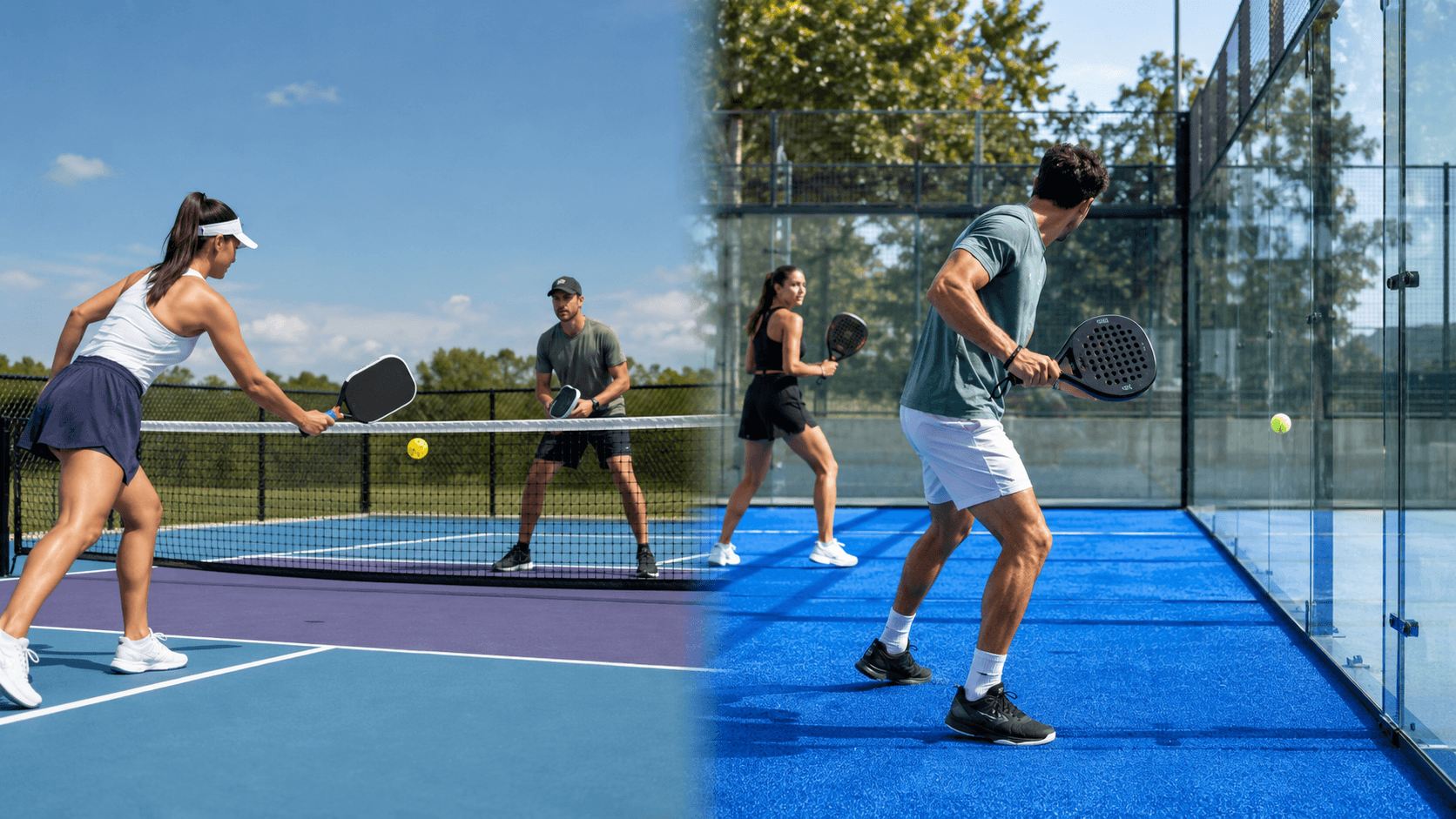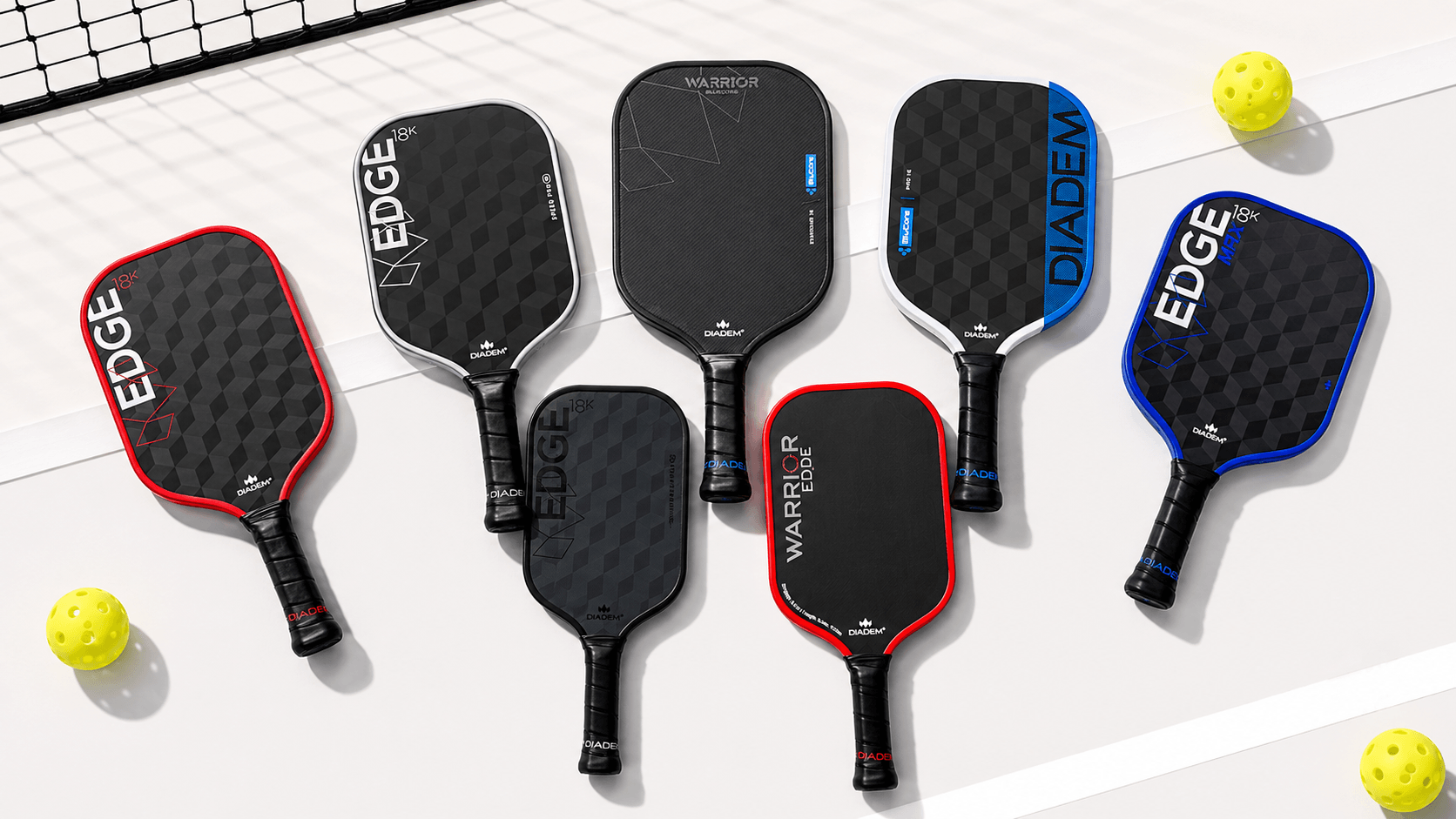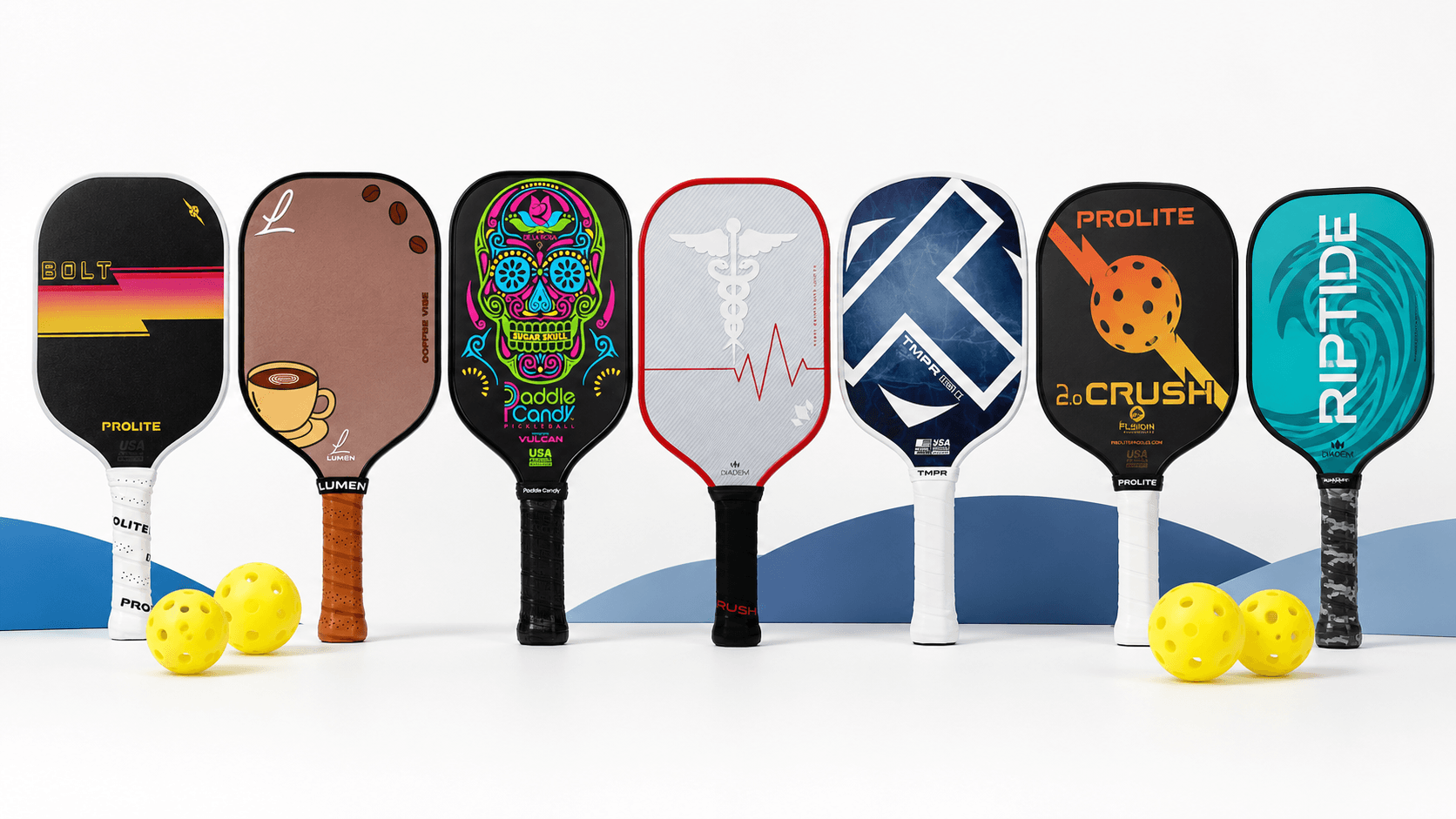

Choosing the right pickleball paddle can significantly impact your performance on the court. One of the most common questions players ask is whether graphite or composite pickleball paddles are better.
Both materials are popular among players of all skill levels, but they provide very different playing characteristics. Graphite paddles are known for their lightweight precision and quick response, while composite paddles offer excellent spin potential and a softer feel.
In this guide, we’ll break down the key differences between graphite vs composite pickleball paddles, including weight, power, spin, durability, and cost so you can choose the best paddle for your playing style.
Graphite vs Composite Pickleball Paddle: Quick Comparison
| Feature | Graphite Paddles | Composite Paddles |
|---|---|---|
| Weight. | Typically lighter | Slightly heavier |
| Power | High pop and responsiveness | Good power with softer feel |
| Spin | Moderate spin potential | Excellent spin potential |
| Durability | Very durable | Durable but textured surface may wear |
| Cost | Mid to high price range | Budget to premium options |
What Is a Graphite Pickleball Paddle?
Graphite pickleball paddles feature a thin graphite face layer placed over a paddle core, usually made from polymer, Nomex, or aluminum.
Although the graphite surface itself is extremely thin, it provides excellent stiffness and responsiveness, which allows players to generate strong, precise shots.
Graphite paddles are popular among:
- Intermediate players
- Advanced players
- Players who value precision and control
Because graphite is lightweight and rigid, it allows for quick paddle movement and fast reaction time during volleys and fast exchanges.
What Is a Composite Pickleball Paddle?
Composite pickleball paddles use a fiberglass or carbon-fiber face layered over a core material.
These surfaces typically have a textured finish, which helps generate more spin on the ball.
Composite paddles are popular with players who want:
- Increased spin
- More forgiveness
- A slightly softer feel
They often provide a little more dwell time when the ball contacts the paddle, which can help players shape shots and apply spin.
Key Differences Between Graphite and Composite Pickleball Paddles
Weight
Most pickleball paddles weigh between 7.0 and 9.0 ounces.
Graphite paddles are often slightly lighter, which can reduce fatigue and allow faster hand speed at the net.
Composite paddles may be slightly heavier depending on construction, but the difference is usually minimal.
Power
Graphite paddles typically produce more immediate pop off the paddle face because of their stiffness.
Composite paddles can still generate power, but their softer feel often gives players slightly more control during longer rallies.
Spin
Composite paddles usually generate more spin because the textured fiberglass surface grips the ball better.
Players who rely on topspin drives, slice returns, or spin serves often prefer composite paddle faces.

Durability
Both paddle types are durable, but their wear patterns differ.
Graphite surfaces tend to maintain their structure for a long time. Composite surfaces may slowly lose texture over time, especially for players who generate heavy spin.
However, both paddle types typically last many seasons of regular play.
Cost
Composite paddles are often available at a wider range of price points, including many budget-friendly options.
Graphite paddles are usually found in mid-range to premium models, although pricing varies by brand and technology.
Pros and Cons of Graphite Pickleball Paddles
Pros
- Lightweight design
- Excellent control and responsiveness
- Strong power on contact
- Highly durable surface
Cons
- Typically slightly more expensive
- Slightly less spin potential compared to textured composite paddles
Pros and Cons of Composite Pickleball Paddles
Pros
- Excellent spin potential
- Softer feel
- Good control for many players
- Often more affordable options
Cons
- Slightly heavier in some models
- Surface texture may wear over time

Which Paddle Material Is Best for You?
Choosing between graphite and composite paddles ultimately comes down to your playing style.
Graphite paddles are often best for:
- Players who value precision
- Players who want a lighter paddle
- Fast-paced volley players
Composite paddles are often best for:
- Players who rely on spin
- Players who prefer a softer feel
- Beginners who want forgiveness
There is no single “best” paddle material. The right choice depends on how you play and what feels most comfortable in your hand.
Final Thoughts
Both graphite and composite pickleball paddles offer excellent performance, and each material has advantages depending on your playing style.
Graphite paddles provide lightweight power and precision, while composite paddles offer enhanced spin and a softer feel. Understanding these differences can help you choose a paddle that matches your skill level and style of play.
If you're looking to improve your game, selecting the right paddle material is one of the most important decisions you can make.