
Quick Answer: What Core Is Best for Pickleball?
For most players, the best pickleball paddle core is polypropylene honeycomb. It offers the best overall combination of control, power, durability, forgiveness, and lightweight performance. That is why the vast majority of modern performance paddles use some variation of a polypropylene honeycomb core.
However, not every player wants the same thing from a paddle. New foam-enhanced paddle technologies are becoming increasingly popular because they can improve stability, expand the sweet spot, and in some cases generate more power. Older core materials like Nomex and aluminum still exist but are far less common in today's market.
The best core for you ultimately depends on your playing style, skill level, and the type of feel you prefer during rallies.
Pickleball Paddle Core Comparison
| Core Type | Power | Control | Feel | Modern Usage |
|---|---|---|---|---|
| Wood | Moderate | Low | Firm | Rare |
| Aluminum | Low | High | Soft | Rare |
| Nomex | High | Moderate | Firm | Uncommon |
| Polypropylene (Honeycomb) | Balanced | High | Soft | Most Common |
| Foam | Moderate-High | High | Plush | Fast Growing |
Understanding Pickleball Paddle Cores
Two pickleball paddles can both have carbon fiber faces and look nearly identical, yet play completely differently. The reason is often the paddle core.
The paddle core is the internal structure located between the paddle faces. While it's hidden from view, it has a major influence on how a paddle performs.
The core affects:
- Power and pop
- Control and touch
- Sweet spot size
- Stability on off-center hits
- Vibration dampening
- Weight and maneuverability
- Overall paddle feel
Modern paddle manufacturers constantly experiment with new core technologies because even small changes can dramatically impact performance.
It's also important to remember that core material is only part of the equation. Core thickness plays a major role as well, which we'll cover later in this guide. For a deeper breakdown, read our guide on 13mm vs 16mm pickleball paddles.


Polypropylene Honeycomb Core: The Modern Standard
Today, polypropylene honeycomb is by far the most common core material found in performance pickleball paddles.
The lightweight honeycomb structure provides an ideal balance of power, control, durability, and comfort. Because of this versatility, polypropylene cores are used in paddles designed for beginners, intermediate players, and professional competitors alike.
Why Players Love Polypropylene Cores
- Excellent balance of power and control
- Large, forgiving sweet spot
- Lightweight construction
- Good vibration absorption
- Consistent performance across all skill levels
Most premium paddles from major brands use some variation of polypropylene honeycomb technology because it performs well in nearly every area.
Foam-Enhanced/Foam Core
One of the biggest recent innovations in pickleball paddle technology has been the increased use of foam.
It's important to understand that most modern "foam paddles" do not use a solid foam core. Instead, many designs combine a traditional polypropylene honeycomb core with strategically placed foam around the perimeter, inside the walls, or throughout portions of the paddle structure.
Benefits of Foam Technologies
- Expanded sweet spot
- Improved stability
- Reduced vibration
- More forgiving off-center hits
- Potentially increased power depending on design
Many of today's most innovative paddles use foam technologies to improve overall performance. Some foam-enhanced paddles are designed primarily for control, while others are engineered specifically to maximize power.
As a result, foam should not automatically be viewed as a "control-only" technology. Modern foam core paddles can offer a wide range of performance characteristics depending on how they are engineered.
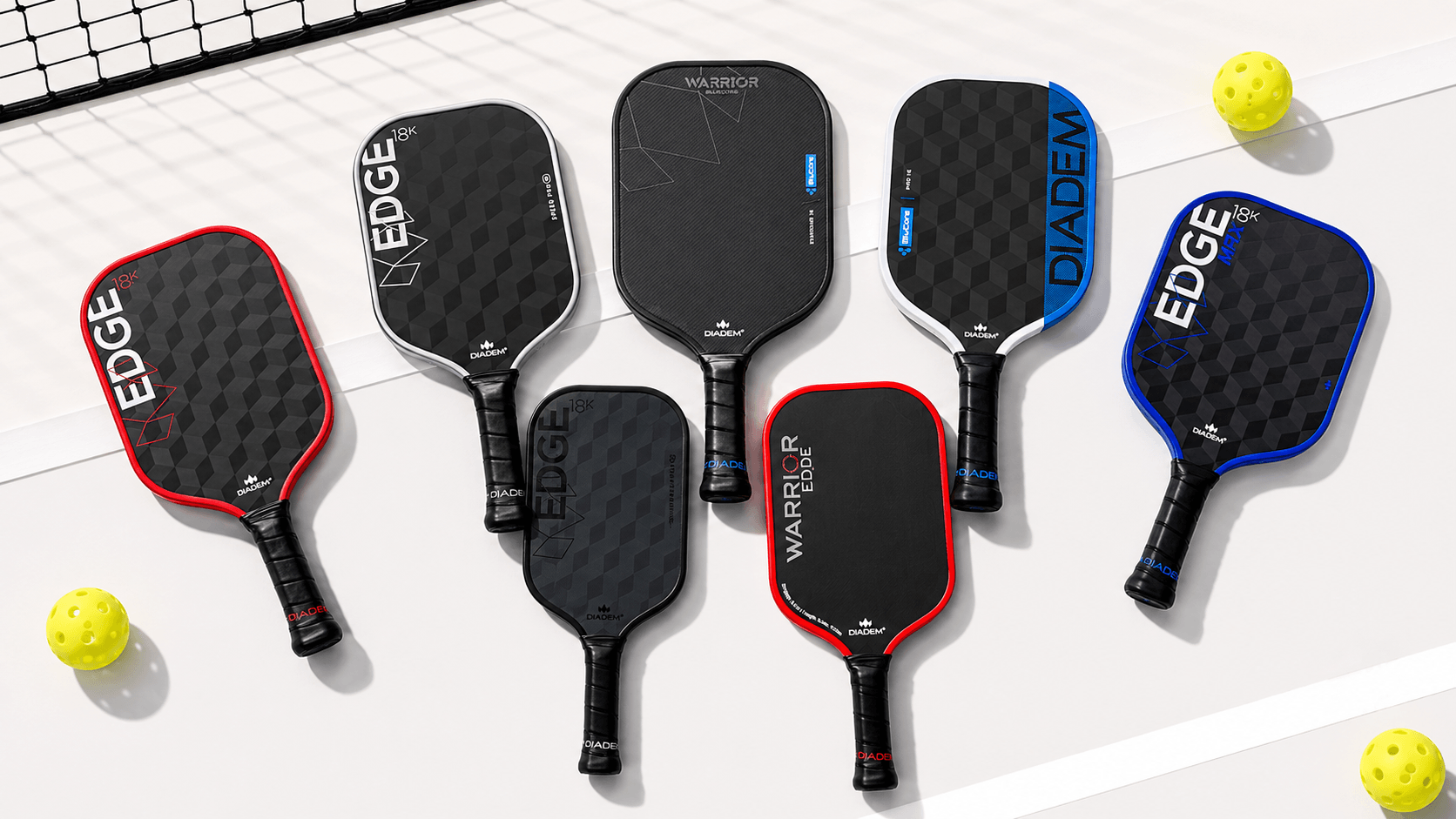
One strong example is the Diadem Warrior BluCore V3 Max Pickleball Paddle, which uses modern foam technology to improve stability, forgiveness, and sweet spot performance.

Nomex Honeycomb Cores
Before polypropylene became the industry standard, many pickleball paddles used Nomex honeycomb cores.
Nomex is a strong paper-based material that is compressed and coated with resin to create a durable honeycomb structure.
Advantages of Nomex Cores
- Excellent durability
- Strong power potential
- Crisp, responsive feel
Potential Drawbacks
- Louder impact sound
- Less forgiving than polypropylene
- Smaller sweet spot
While Nomex cores are much less common today, some players still enjoy their lively feel and powerful response.
Aluminum Honeycomb Cores
Aluminum honeycomb cores were once a popular alternative to both wood and Nomex.
These paddles typically provide a softer feel and excellent touch around the net.
Advantages of Aluminum Cores
- Soft feel
- Excellent control
- Lightweight performance
Potential Drawbacks
- Less durable than modern polypropylene designs
- Smaller sweet spot
- Rarely used in today's premium paddles
Although aluminum cores helped shape the evolution of pickleball equipment, they have largely been replaced by newer technologies.
Should You Consider a Wood Core Paddle?
Wood paddles played an important role in the early days of pickleball and are still commonly found in schools, recreation centers, and beginner paddle sets.
Their biggest advantages are affordability and durability.
However, compared to modern paddle technologies, wood paddles are generally heavier, less forgiving, and offer lower overall performance.
For most players looking to improve their game, a modern polypropylene paddle will provide a significantly better experience. If you're just getting started, browse our beginner pickleball paddles for more forgiving modern options.
Core Material vs Core Thickness: Which Matters More?
Many players focus entirely on core material, but core thickness can be just as important.
- 13mm-14mm: Generally produces more pop and faster ball speed.
- 16mm: Typically provides more control, stability, and forgiveness.
- 18mm+: Often prioritizes touch, dwell time, and consistency.
This means two paddles with identical polypropylene cores can feel dramatically different simply because one uses a thinner core and the other uses a thicker one.
If you're deciding between thicknesses, be sure to read our guide on 13mm vs 16mm pickleball paddles or browse our thick core pickleball paddles.

Best Core for Different Types of Players
Best Core for Beginners
Polypropylene honeycomb is typically the best choice for beginners because it offers forgiveness, comfort, and all-around performance. Many beginner-friendly options can be found in our beginner pickleball paddles collection.
Best Core for Control Players
Control-focused players often prefer thicker polypropylene cores or foam-enhanced designs that provide added stability and touch. Browse our control pickleball paddles for paddles built around consistency and feel.
Best Core for Power Players
Players looking for maximum pace often gravitate toward thinner polypropylene paddles, thermoformed designs, or newer foam-enhanced designs that increase energy transfer. You can compare options in our power pickleball paddles collection.
Best Core for Seniors
Many senior players benefit from polypropylene paddles because they reduce vibration and provide a larger sweet spot without adding excessive weight.
Why Polypropylene Honeycomb Still Dominates Modern Pickleball
After years of paddle innovation, polypropylene honeycomb remains the most widely used core material in pickleball.
It delivers the best combination of performance characteristics for the largest number of players:
- Lightweight feel
- Excellent control
- Strong durability
- Good power potential
- Comfortable vibration dampening
- Large sweet spot
While newer foam technologies continue to evolve, polypropylene remains the foundation of most premium pickleball paddles on the market today.
The face material still matters too. If you're comparing paddle surfaces, our guide to carbon fiber vs fiberglass pickleball paddles explains how paddle faces affect power, control, spin, and feel.

Final Thoughts: What Core Is Best for Pickleball?
If you're looking for the best all-around pickleball paddle core, polypropylene honeycomb remains the safest and most versatile choice.
It offers an excellent balance of power, control, forgiveness, and durability, making it ideal for the vast majority of players.
Foam-enhanced technologies are becoming increasingly popular and may offer advantages in stability, sweet spot size, and feel, while older materials like Nomex and aluminum continue to appeal to certain players who prefer their unique characteristics.
Ultimately, the best paddle core is the one that complements your game, your preferences, and your playing style. To keep comparing your options, explore our full collection of pickleball paddles.