
Choosing your first paddle should make pickleball feel easier, not more complicated. The best pickleball paddles for beginners help you make clean contact, control your shots, and stay comfortable while you learn serves, returns, dinks, blocks, and volleys. You do not need the most expensive paddle on the wall. You need one with a forgiving sweet spot, a manageable weight, a comfortable grip, and enough control to keep the ball in play.
At My Pickleball Gear, the easiest place to start is our Beginner Pickleball Paddles collection. It filters the search down to paddles that make sense for newer players, casual players, families, and anyone upgrading from a basic starter paddle. If you want to compare everything, you can also browse all pickleball paddles.
Quick Answer: What Should Beginners Look For?
A beginner-friendly paddle should be forgiving, easy to swing, and predictable. Most new players should prioritize control and comfort before power. A paddle that helps you hit more balls in the court will improve your game faster than one that only helps you hit harder.
- Weight: Most beginners do best with a midweight paddle that feels stable without tiring the arm.
- Shape: Standard and widebody shapes are usually easier to learn with than long, narrow paddles.
- Core: A polymer core is a reliable choice for comfort, durability, and control.
- Thickness: Thicker paddles, often around 16mm, usually feel softer and more controlled.
- Grip: The handle should feel secure without forcing you to squeeze tightly.
- Material: Composite and fiberglass are approachable and budget-friendly; carbon fiber can be a smart step-up choice.
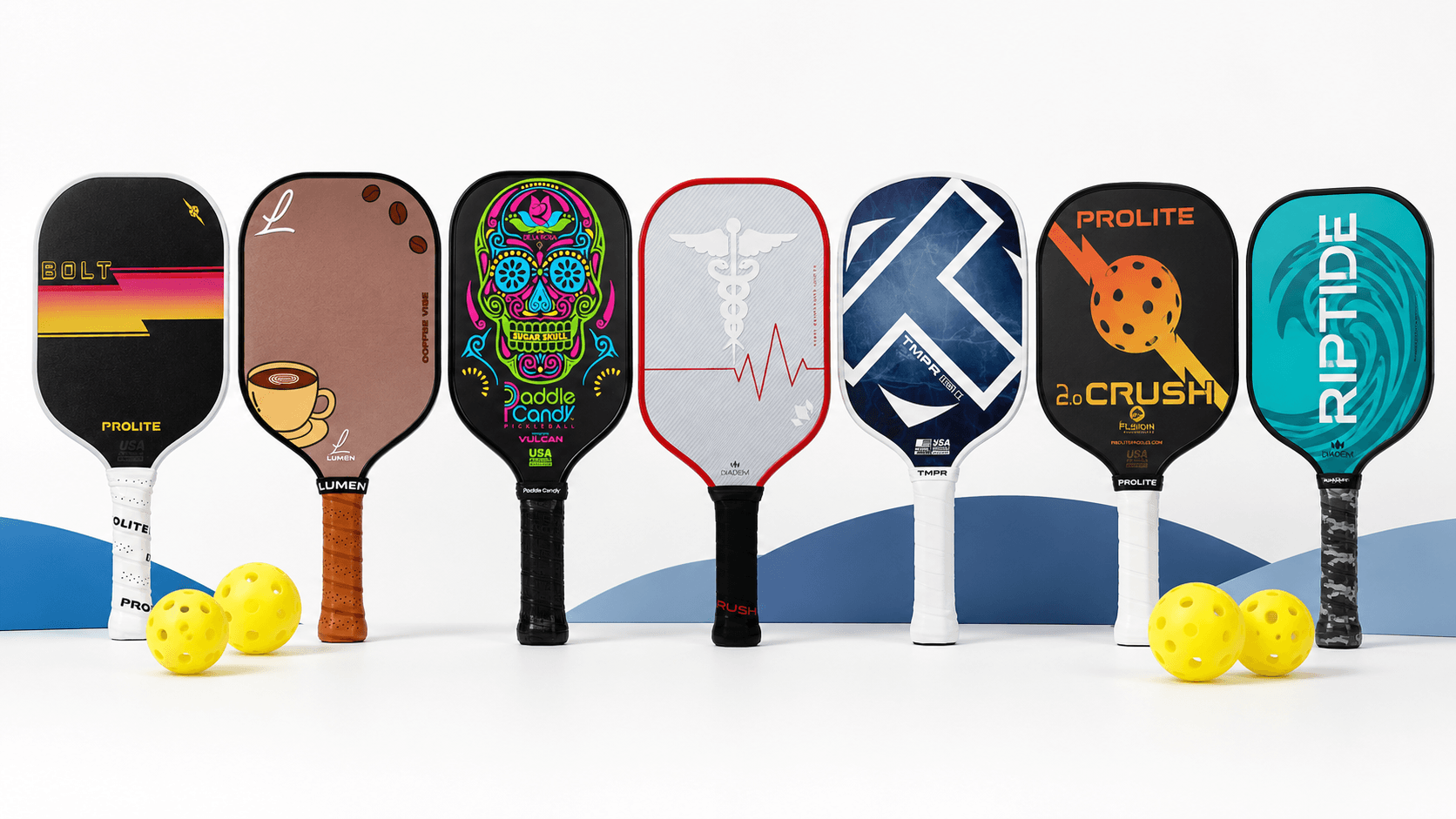
If you are buying for two new players, a set can be the simplest option. The Lumen Paddles Coffee/Mountain Vibe Pickleball Paddle Set gives beginners two playable paddles without overcomplicating the purchase.
1. Start With Forgiveness, Not Maximum Power

Power is tempting, but forgiveness matters more when you are learning. New players are still developing timing, footwork, swing path, and paddle angle. A forgiving paddle gives you more usable hitting area, which means fewer mishits and more rallies.
The sweet spot is the part of the paddle face that produces the cleanest, most controlled contact. If you hit outside the sweet spot, the ball may die, pop up, or fly off target. Wider and more balanced paddle shapes usually give beginners a larger, easier-to-use sweet spot.
If this is a new concept, read our guide on what the sweet spot on a pickleball paddle is. It is one of the most important things to understand before buying your first paddle.
2. Choose a Weight You Can Swing Comfortably

Paddle weight affects control, hand speed, power, stability, and arm comfort. A paddle that is too heavy can slow your reactions at the kitchen and cause fatigue. A paddle that is too light may feel easy to swing but less stable when blocking hard shots.
For most beginners, a midweight paddle is the safest starting point. It gives enough stability for returns, volleys, and blocks while still being easy to maneuver. If you have wrist, elbow, or shoulder sensitivity, lean lighter and avoid overswinging.
- Lightweight paddles: easier to move quickly, but may feel less solid on hard shots.
- Midweight paddles: the best all-around choice for most beginner players.
- Heavy paddles: can add power and stability, but may be harder to control for new players.
For a deeper breakdown, use our pickleball paddle weight guide before you buy.
3. Pick a Core That Helps You Control the Ball

Most modern beginner paddles use a polymer core because it is durable, relatively quiet, and comfortable. Core thickness also matters. Thicker cores tend to absorb pace and help with control. Thinner cores often feel quicker and more powerful but can be less forgiving for new players.
If your main goal is to keep the ball in play, look at control-focused paddles. The Diadem First Responder V2 Rush Pickleball Paddle is a strong beginner-friendly option for players who want a lighter, controlled feel and dependable response. It is especially useful if you are learning dinks, blocks, resets, and placement.
You can compare more options in our Control Pickleball Paddles collection. For more detail, see our guides to pickleball paddle core materials and 13mm vs 16mm pickleball paddles.
4. Compare Composite, Fiberglass, and Carbon Fiber
Paddle face material affects feel, pop, spin, durability, and price. Beginners do not need a pro-level paddle right away, but the right surface can make the paddle more enjoyable and easier to grow with.
Composite and Fiberglass Paddles
Composite and fiberglass paddles are popular starter choices because they feel lively, approachable, and budget-friendly. They can help newer players generate depth on serves and returns without perfect mechanics. They are a good fit for recreational games, families, schools, and players who want value.
The Lumen Mountain Vibe Pickleball Paddle and Lumen Coffee Vibe Pickleball Paddle are easy single-paddle options for players who want an accessible paddle with a friendly feel. You can also browse our Composite Pickleball Paddles collection.
Carbon Fiber Paddles
Carbon fiber paddles usually offer more touch, spin potential, and consistency. They often cost more, but they can be worth it if you plan to play regularly, take lessons, or want a paddle you will not outgrow quickly.
If you are comparing step-up Volair options, the Volair Mach 1 Pickleball Paddle and Volair Mach 2 Pickleball Paddle are better fits for motivated beginners and improving players than bargain starter paddles. Some shoppers search for Volair Pro 1 or Volair Pro 2 style paddles when they want a more performance-oriented feel; these in-stock Volair models are practical options to compare.
For more help choosing a surface, read Carbon Fiber vs Fiberglass Pickleball Paddles or browse our Carbon Fiber Paddles.

5. Choose the Right Paddle Shape
Paddle shape changes forgiveness, reach, swing speed, and the size of the sweet spot. Beginners usually do best with standard or widebody paddles because they are easier to square up on the ball.
- Standard shape: balanced, familiar, and good for all-around learning.
- Widebody shape: very forgiving and stable, making it a smart beginner choice.
- Elongated shape: adds reach and leverage, but can feel less forgiving for many new players.
If you are still building consistency, choose forgiveness first. Later, you can try an elongated pickleball paddle if you want more reach for singles, drives, or a two-handed backhand.
6. Do Not Ignore Grip Comfort
A paddle can have great specs and still feel wrong if the grip does not fit your hand. Beginners should look for a grip that feels secure without squeezing hard. Too much grip pressure makes it harder to control touch shots and can increase arm fatigue.
If a grip feels slightly small, you can usually add an overgrip. If it feels too large, it is much harder to fix. When in doubt, choose the paddle that feels easier to hold, swing, and reset after each shot.

Best Beginner Paddle Picks at My Pickleball Gear
Here are practical recommendations based on how most beginners shop.
Best for Two New Players: Lumen Coffee/Mountain Vibe Paddle Set
The Lumen Paddles Coffee/Mountain Vibe Pickleball Paddle Set is a smart choice for couples, families, and friends starting together. It is convenient, beginner-friendly, and avoids the guesswork of choosing two separate paddles. Paddle sets such as this and Prolite Bolt Paddle Sets are especially useful when value and simplicity matter.
Best for Control: Diadem First Responder V2 Rush
The Diadem First Responder V2 Rush is a good fit if you want confidence on softer shots. Choose this style of paddle if you care more about placement, resets, and keeping rallies alive than swinging for maximum power.
You can also compare more Diadem Pickleball Paddles if you like the brand.
Best Stylish Beginner Singles: Lumen Mountain Vibe and Lumen Coffee Vibe
The Lumen Mountain Vibe and Lumen Coffee Vibe are good single-paddle choices for recreational players who want something more reliable than an ultra-cheap starter paddle. They are approachable, fun, and easy to recommend for casual play.
Best Step-Up Picks: Volair Mach 1 and Volair Mach 2
The Volair Mach 1 and Volair Mach 2 are not the most basic beginner paddles, but they make sense for athletic beginners, tennis converts, and players who expect to play often. They are better long-term choices if you want more spin potential, feel, and performance as your game improves.
Common Beginner Paddle Buying Mistakes
- Buying only for power: control and forgiveness help beginners improve faster.
- Choosing the cheapest paddle possible: very cheap paddles often have poor feel, smaller sweet spots, and limited durability.
- Ignoring weight: the wrong weight can slow your hands or tire your arm.
- Picking an advanced shape too soon: elongated paddles are useful, but not always easiest for a first paddle.
- Forgetting the player: a casual family paddle and a weekly league paddle may not be the same best choice.
If you are shopping for a child, read our guide to the best pickleball paddles for kids. Younger players often need different weight, sizing, and grip considerations.
Final Buying Advice
The best beginner paddle is the one that helps you enjoy the game, make cleaner contact, and build confidence. Start with a forgiving shape, comfortable grip, manageable weight, and a control-friendly core. If you are playing casually, a composite paddle or paddle set is often the best value. If you plan to play several times per week, a control paddle or carbon fiber paddle may be worth the upgrade.
Start with our Beginner Pickleball Paddles collection, then compare paddle sets, control paddles, composite paddles, and carbon fiber options based on your budget and goals. When in doubt, choose the paddle that feels easiest to swing and gives you the most confidence keeping the ball in play.