
If you are comparing pickleball vs padel, the biggest question is not which sport is “better.” It is which one fits your courts, budget, learning style, and gear needs. Both are social, doubles-friendly paddle sports, but they play very differently once the rally starts.
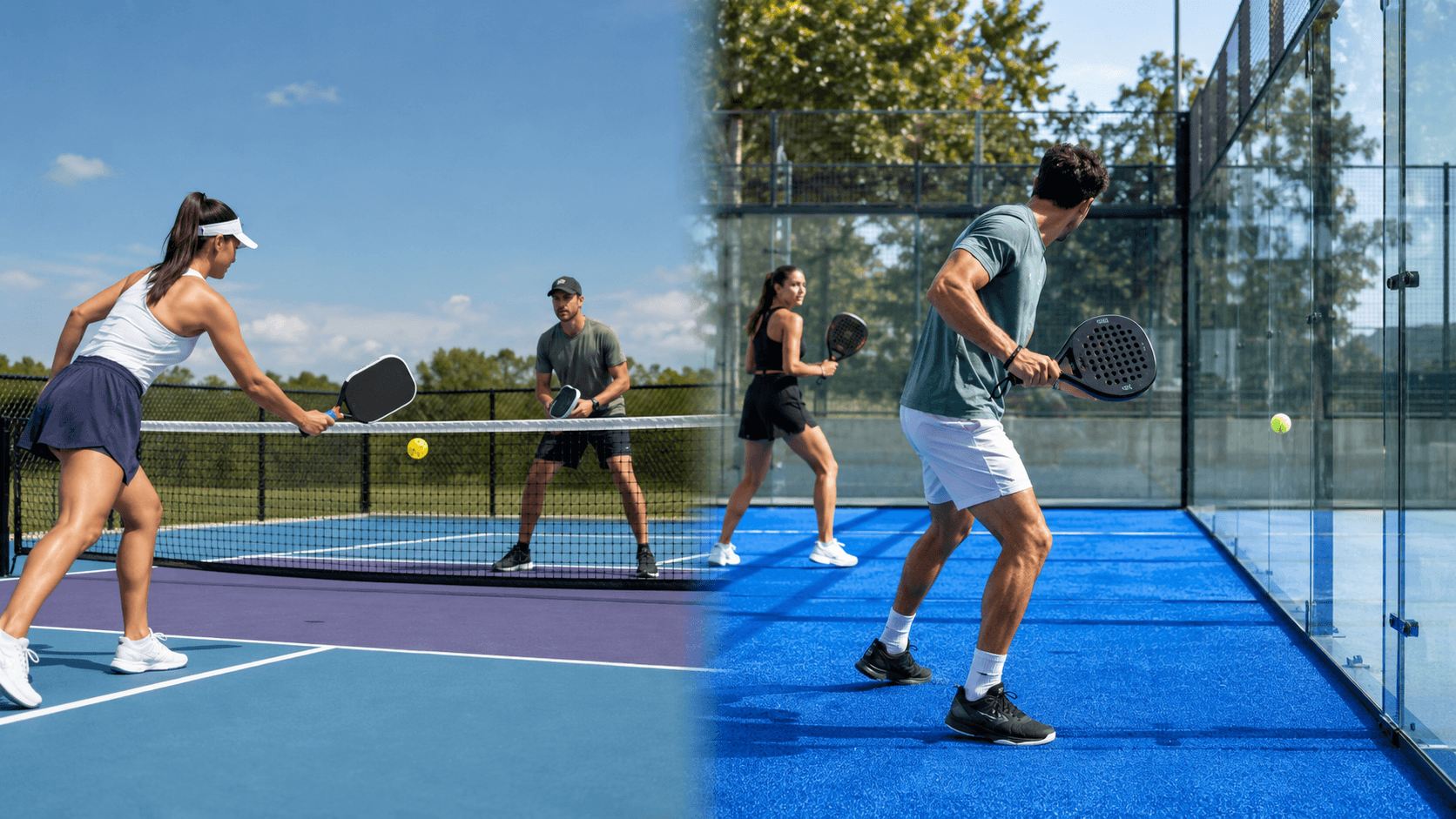
Pickleball is played on an open 20 x 44 foot court with a solid paddle and a hard plastic ball with holes. Padel is played on an enclosed court with glass or mesh walls, a perforated racket, and a lower-pressure ball that looks closer to a tennis ball. In the U.S., pickleball is usually easier to find, cheaper to start, and more beginner-friendly. Padel adds the fun of wall rebounds, but it usually requires access to a dedicated padel facility.
For shoppers, the practical difference is simple: pickleball has a lower barrier to entry. You can start with a comfortable beginner paddle, a few balls, and a local court. If you are leaning toward pickleball, our Beginner Pickleball Paddles collection is the best place to compare forgiving, easy-to-use options before spending money on advanced gear.
Pickleball vs Padel: Quick Comparison
- Court: Pickleball uses a smaller open court. Padel uses a larger enclosed court with walls that are part of play.
- Equipment: Pickleball uses a solid paddle and plastic perforated ball. Padel uses a perforated racket and a pressurized ball.
- Scoring: Pickleball commonly uses side-out scoring. Padel uses tennis-style scoring: 15, 30, 40, game.
- Learning curve: Pickleball is usually easier for complete beginners. Padel may feel natural to tennis, squash, or racquetball players.
- Cost: Pickleball is typically less expensive to start because courts, paddle sets, and balls are widely available.
- Best fit: Pickleball is great for beginners, families, clubs, schools, and casual fitness. Padel is ideal for players who enjoy wall play, longer rallies, and a tennis-like format.
What Is Pickleball?
Pickleball is a paddle sport played as singles or doubles, though doubles is the most common format. It combines simple serving mechanics, a compact court, and a slower plastic ball to create a sport that new players can enjoy quickly.
The most important area on a pickleball court is the non-volley zone, often called the kitchen. Players cannot volley while standing in this zone, which keeps the game from becoming only about power. Instead, pickleball rewards soft shots, placement, patience, and fast reactions at the net.
That is why beginner gear matters. A forgiving paddle with a comfortable weight and a generous sweet spot can make early sessions more enjoyable. If you are still learning how paddle shape and contact area affect play, read our guide to what the sweet spot on a pickleball paddle is.
What Is Padel?
Padel is a racket sport usually played in doubles on an enclosed court. The court has glass and mesh walls, and players can use those walls after the ball bounces. This gives padel a different rhythm than pickleball because a defensive shot can stay alive by rebounding off the glass.
Padel rackets are stringless and perforated, but they are not pickleball paddles. Padel balls are also different. They are pressurized and closer to tennis balls, though typically slightly lower in pressure. Padel scoring follows the familiar tennis format, which can make it easy to understand for tennis players.
The biggest drawback for many shoppers is access. Padel requires a purpose-built enclosed court. Pickleball can be played on dedicated courts, converted tennis courts, recreation center courts, gyms, clubs, and many public parks.

Court Differences: Open Court vs Playable Walls
The court design is one of the clearest differences between pickleball and padel.
Pickleball court
- Size: 20 feet wide by 44 feet long
- Net height: 36 inches at the sidelines and 34 inches in the center
- Walls: None
- Key feature: A 7-foot non-volley zone on each side of the net
Because the pickleball court is compact, players do not need to cover as much ground as they would in tennis or padel. That makes pickleball approachable for a wide range of ages, athletic backgrounds, and fitness levels.
Padel court
- Size: About 10 meters wide by 20 meters long
- Walls: Glass and mesh walls are playable after the ball bounces
- Format: Almost always doubles
- Playing style: Rallies often continue through rebounds off the walls
Padel court design creates exciting rallies, but it also adds a skill pickleball does not require: reading wall rebounds. New padel players must learn when to let the ball hit the glass and when to take it early.

Equipment Differences: Paddle, Racket, and Ball
Pickleball and padel equipment are not interchangeable. The balls, contact surfaces, and court demands are different enough that each sport needs its own gear.
Pickleball gear
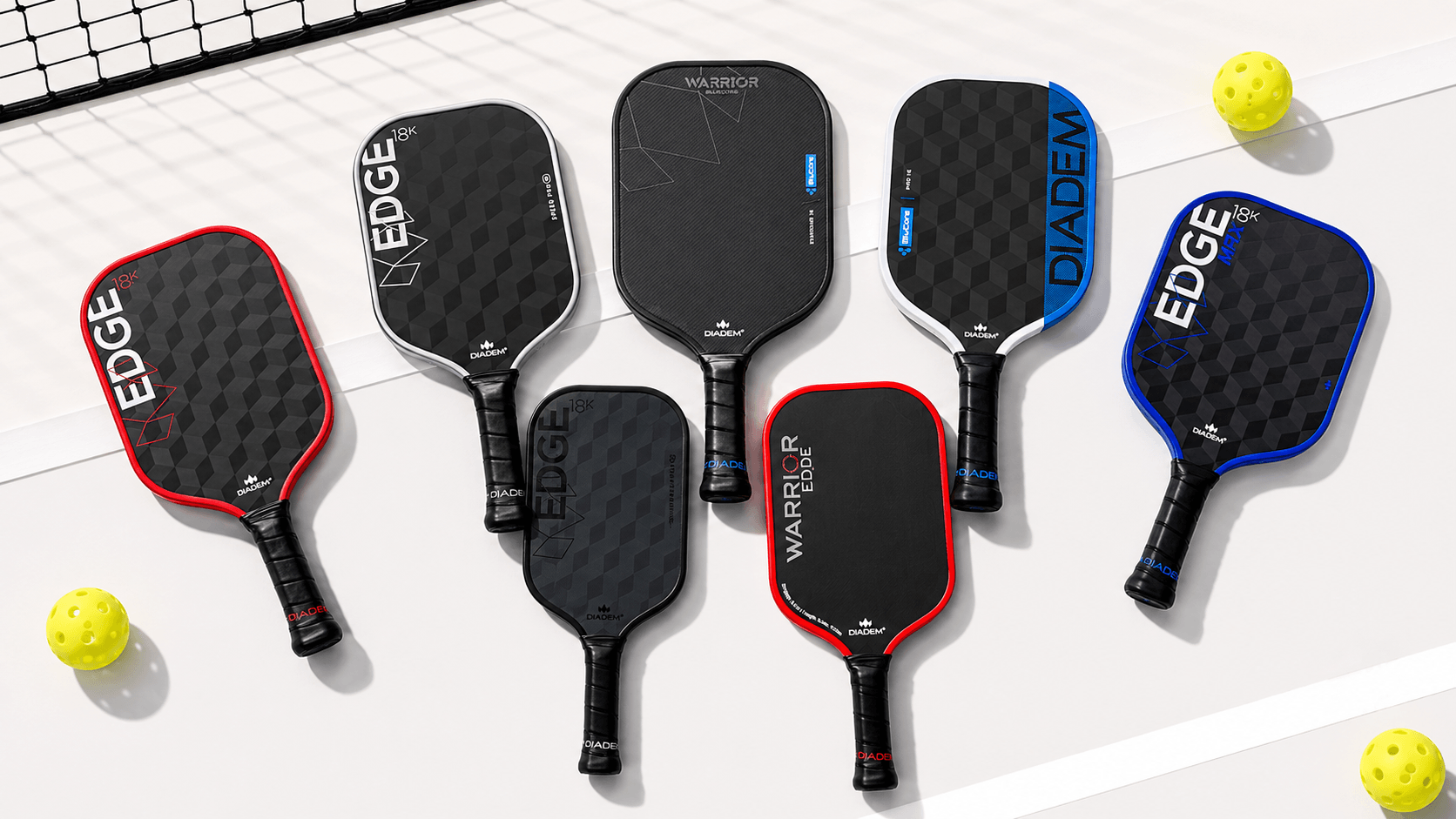
Pickleball uses a solid paddle, usually built with a polymer core and a composite, fiberglass, or carbon fiber face. The ball is hard plastic with holes. Outdoor pickleballs are generally made to handle wind, rougher court surfaces, and faster play.
If you are buying outdoor balls, the Franklin X-40 FAST Outdoor Pickleball is a practical choice for new players because it is widely recognized, durable, and designed for outdoor courts.
For paddles, start with your skill level rather than the most expensive model. New players should compare Beginner Pickleball Paddles first, then browse All Paddles once they know whether they prefer more control, power, reach, or spin.
Padel gear
Padel uses a shorter, stringless racket with holes through the face. Rackets may be round, teardrop, or diamond-shaped depending on whether they emphasize control, balance, or power. Padel balls are pressurized and bounce more like tennis balls than pickleballs.
Do not use a pickleball paddle for padel or a padel racket for pickleball. Using the wrong equipment can hurt performance, damage gear, and may not meet the rules of the sport you are playing.
Rules and Scoring Differences
Pickleball and padel both use underhand serves, but their scoring and rally structure are different.
Pickleball rules to know
- Serve: Serves are hit underhand or with an approved drop serve.
- Two-bounce rule: The serve and return must each bounce before either team can volley.
- Kitchen rule: Players cannot volley while standing in the non-volley zone.
- Scoring: In traditional scoring, only the serving team can score points.
These rules help beginners get into rallies while still giving advanced players plenty of room for strategy. As players improve, points often revolve around dinks, resets, volleys, speedups, and controlled attacks near the kitchen line.
Padel rules to know
- Serve: Serves are underhand and hit below waist level after a bounce.
- Scoring: Padel uses tennis-style scoring: 15, 30, 40, game.
- Walls: The ball can rebound off the walls after it bounces on the court.
- Doubles: Padel is primarily designed and played as a doubles sport.
Padel rallies can last a long time because the walls create more defensive options. Pickleball rallies can also be long, but the tactics are usually centered around court position and touch rather than wall angles.

Which Sport Is Easier to Learn?
For most total beginners, pickleball is easier to learn than padel. The smaller court, slower ball, underhand serve, and simple open-court layout make it easier to start rallying in your first session.
Padel is still beginner-friendly compared with tennis, but wall play takes time. Players need to learn how the ball comes off the glass, when to let it pass, and how to recover after rebounds. If you have played tennis, racquetball, or squash, padel may feel natural. If you are new to racket sports, pickleball is usually the smoother first step.
Paddle choice also affects the learning curve. A control-focused paddle helps beginners keep more balls in play and build confidence. If control is your priority, browse our Control Pickleball Paddles collection.
What Should a Beginner Buy for Pickleball?
If this comparison has you leaning toward pickleball, avoid overbuying. You do not need a pro-level paddle on day one. Start with dependable gear that helps you learn the basics and enjoy longer rallies.
1. A forgiving paddle or paddle set
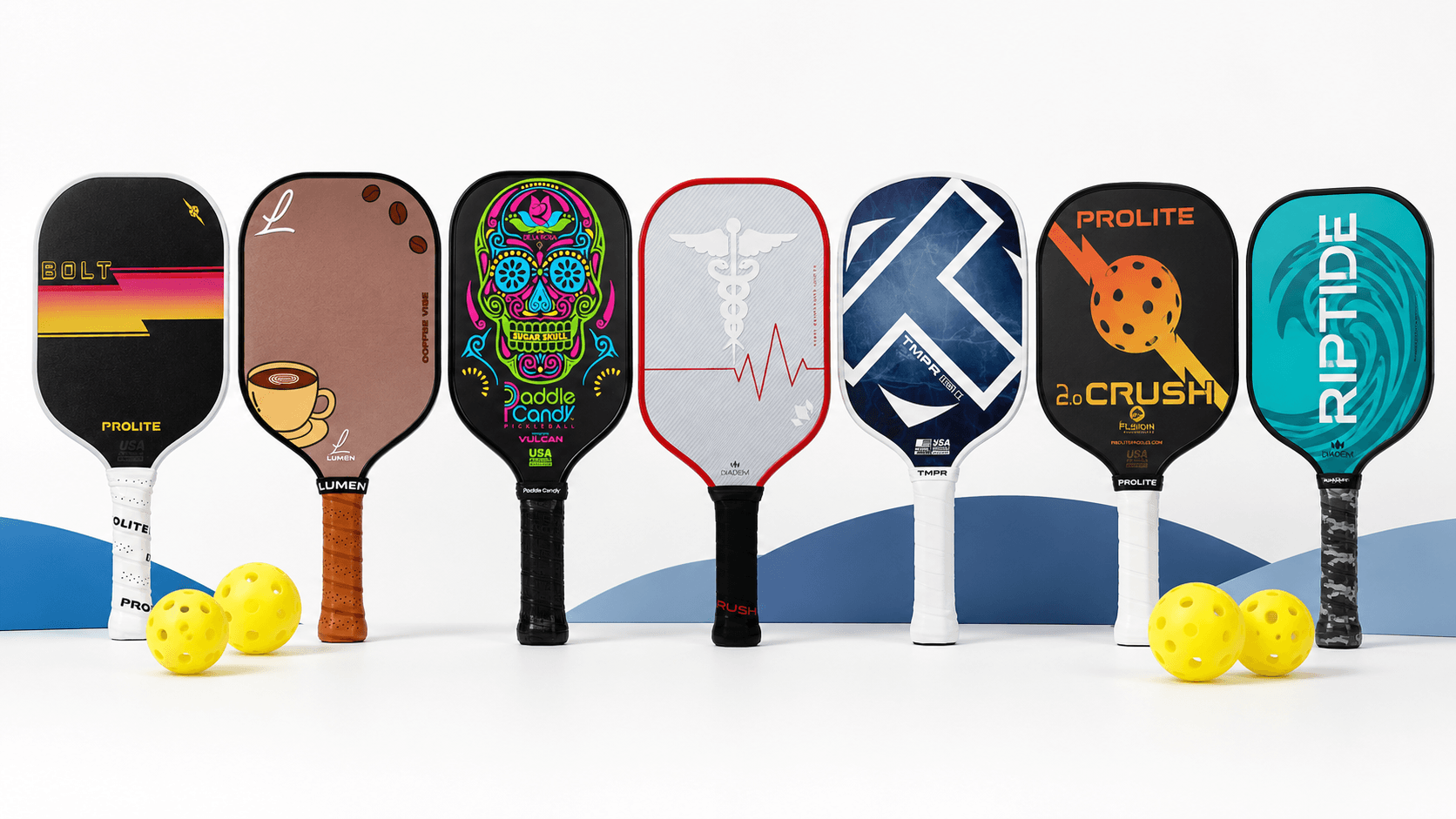
A paddle set is often the best value if you are buying for two players, a family, a couple, or a small group. The Prolite Bolt Pickleball Paddle Set (2-Pack) is a useful starter option because it gives two players what they need to get on court without building a setup one item at a time.
If you prefer a single paddle, the Diadem Hero Pickleball Paddle is a simple, approachable option from a known pickleball brand. You can also compare more models in our Diadem Pickleball Paddles collection.
2. The right ball for your court
Outdoor and indoor pickleballs are not the same. Outdoor balls are usually harder, heavier, and better for wind and abrasive surfaces. Indoor balls are typically softer and have larger holes. If you are playing outside, start with the Franklin X-40 FAST Outdoor Pickleball. For a deeper breakdown, read our guide to indoor vs outdoor pickleballs.
3. A paddle material that matches your goals
Beginners often do well with versatile composite paddles because they balance price, comfort, and playability. As you improve, you may want to compare carbon fiber paddles for more feel, control, and spin potential. Browse Composite Pickleball Paddles or Carbon Fiber Paddles when you are ready to narrow your options.
If you want to understand how paddle faces affect feel, read our guide to carbon fiber vs fiberglass pickleball paddles. If you are comparing paddle cores, our article on pickleball paddle core materials explains poly cores, foam cores, and thickness in practical terms.
Which Sport Is Better for Fitness?
Both sports can provide excellent exercise. Padel usually involves more running, turning, and explosive movement because the court is larger and the walls keep more balls in play. It can feel more physically dynamic, especially during long doubles points.
Pickleball can be lower impact, but that does not mean it is easy. Competitive doubles includes quick lateral movement, low ready positions, fast hands at the kitchen, and repeated short bursts. For social fitness with a lower barrier to entry, pickleball is hard to beat.
Which Sport Costs Less to Start?
Pickleball is usually more affordable for most beginners. Public courts are common in many areas, and starter paddles, paddle sets, and balls are easy to find. A basic setup can be as simple as a paddle, a few balls, and court shoes you already own.
Padel equipment is not always dramatically more expensive, but court access can be. Because padel requires an enclosed court with glass or mesh walls, players often rely on clubs, memberships, or paid court reservations.
Final Verdict: Should You Choose Pickleball or Padel?
Choose pickleball if you want the easiest path onto the court, lower startup costs, beginner-friendly rules, and widely available gear. It is the more practical choice for families, schools, clubs, casual players, and anyone who wants to start playing quickly.
Choose padel if you have access to dedicated courts and like tennis-style scoring, wall play, and longer rallies. It is a fun, strategic sport, but it is not as easy to access in many areas.
For most My Pickleball Gear shoppers comparing pickleball vs padel, the best next step is to start with reliable pickleball gear that helps you build confidence. Shop Beginner Pickleball Paddles, compare options in All Paddles, and add outdoor balls like the Franklin X-40 FAST Outdoor Pickleball so you are ready for your first match.